
 Admin
Admin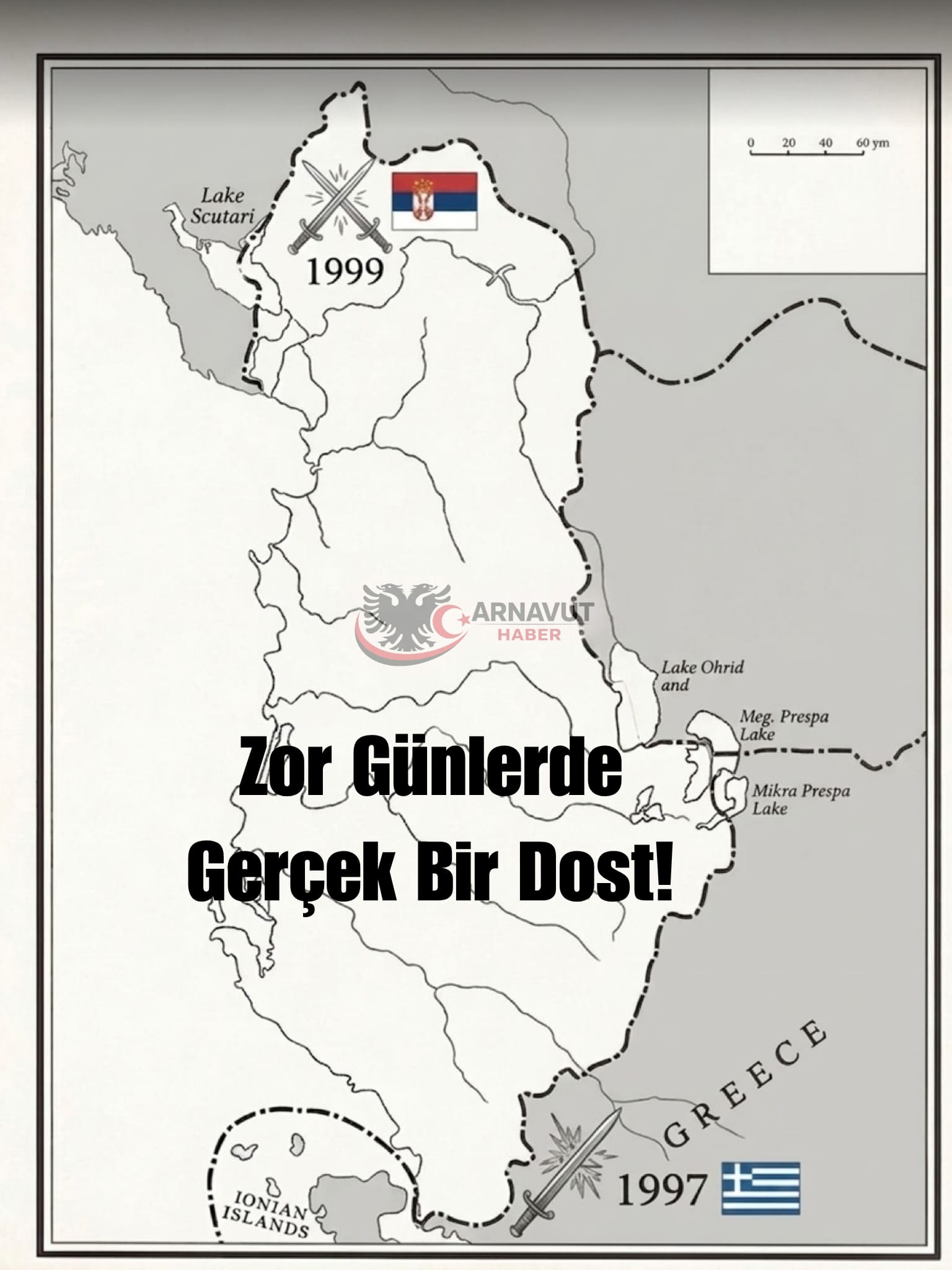
💠 Zor Günlerde Gerçek Bir Dost
“Dost kara günde belli olur.”
Arnavutluk için modern tarihinin en karanlık ve en tehlikeli anlarında o dost Türkiye oldu. Ülke çöküşün eşiğine sürüklendiğinde ve varoluşsal tehditlerle karşı karşıya kaldığında, Türkiye yalnızca diplomatik destek vermedi; aynı zamanda bir kalkan oldu.
Arnavutluk Krizi ve Ültimatom
1997 yılında, saadet zincirlerinin çökmesiyle Arnavutluk kaosa sürüklendi. Devlet yapısı ciddi şekilde zayıfladı, ordu yağmalandı ve işlevsiz hale geldi. Bu ortamda, Yunanistan’daki milliyetçi çevreler, “Yunan azınlığı koruma” bahanesiyle Güney Arnavutluk’a askeri müdahale hazırlığına girişti.
Sahadaki tehlike son derece gerçekti. Güney şehirlerinde dış destekli ayrılıkçı hareketler körükleniyor, silahlı gruplar Kuzey Epir bayrakları açarak özerklik ya da ayrılık talep ediyordu. Deniz tarafında ise Yunan savaş gemileri Saranda Körfezi’ne yaklaşarak olası bir çıkarma sinyali veriyordu. Bu durum, Arnavutluk’un toprak bütünlüğü için doğrudan bir tehdit oluşturuyordu.
Avrupa ülkeleri sessiz kalırken ya da süreci diplomatik komitelere havale ederken, Türkiye kararlı bir şekilde devreye girdi. Ankara, Yunanistan’ın olası bir müdahalesinin tüm Balkanlar’ı istikrarsızlaştıracağını ve Arnavutluk’un egemenliğini ihlal edeceğini açıkça gördü.
Dönemin Türkiye Başbakan Yardımcısı Tansu Çiller, Yunan hükümetine sert ve net bir ültimatom verdi. Yunan askerinin Arnavutluk topraklarına ayak basması halinde bunun Türkiye’ye yapılmış bir saldırı sayılacağını ve askeri karşılık verileceğini açıkladı. Açıklaması Balkanlar’da yankılandı:
“Arnavutluk’a dokunan Türkiye’ye dokunmuş sayılır.”
Bu yalnızca bir söylem değildi; askeri bir kırmızı çizgiydi. Türkiye’nin bu net tutumu karşısında, Yunanistan iki cepheli bir çatışma riskini göze alamadı ve “Güvenlik Bölgesi” planından vazgeçti. Müdahale, yalnızca çok uluslu bir BM görevi olan Operation Alba çerçevesinde sınırlı kaldı. Türkiye bu misyona 900 asker göndererek Arnavutluk’un istikrarına katkı sağladı.
Dönemin Arnavutluk Ankara Askerî Ataşesi Hajro Limaj daha sonra şu değerlendirmeyi yaptı:
“Arnavutluk’un ne siyasi ne de askeri gücü kalmıştı. Diğer devletler sessizdi, Arnavutluk’un sınırlarını garanti eden Türkiye oldu.”
1999: Kosova Savaşı ve Sınırların Savunulması
İki yıl sonra Arnavut halkı yeni bir felaketle karşı karşıya kaldı. Mart 1999’da Slobodan Milošević yönetimindeki Sırp güçleri Kosova’da Arnavutlara karşı etnik temizlik başlattı. Çatışmalar kısa sürede sınır hattına sıçradı.
Arnavutluk’un Tropoja ve Krumë gibi sınır bölgeleri bombalandı. Sırp birlikleri zaman zaman sınırı geçerek çatışmalara girdi ve mayınlar döşedi. 1997 krizinin ardından toparlanmaya çalışan Arnavutluk ordusu, Yugoslav ordusuna kıyasla oldukça zayıftı.
Bu kritik anda Arnavutluk Başbakanı Pandeli Majko acil destek için Ankara’ya başvurdu.
Acil Çağrı (Mart 1999)
29 Mart 1999’da, Kurban Bayramı sırasında, Majko’nun talimatıyla Hajro Limaj, Türkiye Başbakanı Bülent Ecevit ile acil bir görüşme gerçekleştirdi. Mesaj netti: Sırbistan Arnavutluk topraklarını vuruyordu.
Ecevit, durumu derhal Genelkurmay ile görüştü ve aynı gece Türkiye’nin kararlı tutumu kamuoyuna duyuruldu:
“Türkiye Cumhuriyeti devleti ve silahlı kuvvetleri kardeş Arnavut halkının yanındadır. Arnavutluk’un sınırlarına ve toprak bütünlüğüne dokunulmasına izin vermeyecektir.”
Bu sözler de sadece söylemde kalmadı. Ertesi sabah Türkiye askeri depolarını açtı ve askeri malzemeler saatler içinde Arnavutluk’a ulaştırıldı.
Rusya’nın 17 Gemilik Planı ve Türkiye’nin Rolü
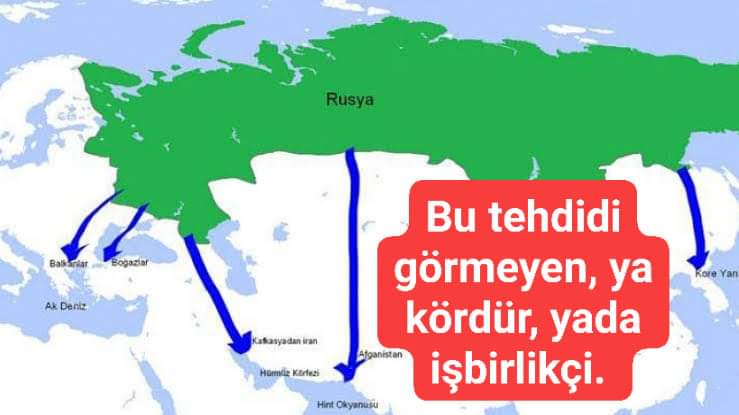
Krizin zirvesinde Arnavutluk hükümetine ulaşan istihbarat, Rusya’nın Karadeniz’den Adriyatik’e 17 savaş gemisi göndermeye hazırlandığını ortaya koydu. Bu filo, gelişmiş hava savunma sistemleriyle bölgede bir “füze şemsiyesi” oluşturabilirdi.
Bu gerçekleşseydi, NATO’nun hava üstünlüğü ciddi şekilde zayıflayacak ve Sırp kara harekâtının önü açılacaktı.
Ancak Türkiye, Boğazlar üzerindeki yetkisini kullanarak bu filonun geçişine izin vermedi. Kararlı duruşu sayesinde Rusya bu planından vazgeçmek zorunda kaldı. Böylece savaşın seyrini değiştirebilecek bir gelişme daha engellenmiş oldu.
Türkiye’nin Sahadaki Rolü
Türkiye, hava sahasını açtı ve 18 adet F-16 ile yaklaşık 2000 saatlik uçuş gerçekleştirdi.
20.000 mülteciyi kabul ederek büyük insani destek sağladı.
Savaş sonrası KFOR kapsamında Kosova’ya 1000 asker gönderdi.
Bugün bile Kosova’da Türk askerleri halk tarafından bir “umut ışığı” olarak görülmektedir.
Kardeşliğin Mirası
En zor zamanlarda, dünya sadece söz verirken Türkiye bir kalkan sundu. Arnavutluk’un toprak bütünlüğünü savunmaya hazır olan tek müttefik olarak öne çıktı.
Bu olaylar, birçok kişi için sarsılmaz bir bağın kanıtı olarak görülüyor:
Topraklarımızda başka bayraklar yükselirken, yanımızda kimin durduğunu hatırlatan bir tarih.
Kaynak: Nuhi Geci
💠 Në ditët e vështira, një mik i vërtetë
“Shoku njihet në ditë të vështira.”
Për Shqipërinë, në momentet më të errëta dhe më të rrezikshme të historisë së saj moderne, ai mik ishte Turqia. Kur vendi u shty drejt kolapsit dhe u përball me kërcënime ekzistenciale, Turqia nuk dha vetëm mbështetje diplomatike; ajo u bë një mburojë.
Kriza e Shqipërisë dhe ultimatumi
Në vitin 1997, me kolapsin e skemave piramidale, Shqipëria u zhyt në kaos. Struktura shtetërore u dobësua rëndë, ushtria u grabit dhe u bë jofunksionale. Në këtë situatë, qarqe nacionaliste në Greqi nisën përgatitjet për një ndërhyrje ushtarake në jug të Shqipërisë, me pretekstin e “mbrojtjes së minoritetit grek”.
Rreziku në terren ishte real. Në qytetet jugore po nxiteshin lëvizje separatiste të mbështetura nga jashtë, ndërsa grupe të armatosura ngrinin flamuj të “Epirut të Veriut” duke kërkuar autonomi apo shkëputje. Nga deti, anije luftarake greke iu afruan Gjirit të Sarandës, duke sinjalizuar një zbarkim të mundshëm. Kjo përbënte një kërcënim të drejtpërdrejtë për integritetin territorial të Shqipërisë.
Ndërsa vendet evropiane qëndronin të heshtura ose e delegonin çështjen në komitete diplomatike, Turqia ndërhyri me vendosmëri. Ankaraja e kuptoi qartë se një ndërhyrje greke do të destabilizonte gjithë Ballkanin dhe do të shkelte sovranitetin e Shqipërisë.
Zëvendëskryeministrja e atëhershme e Turqisë, Tansu Çiller, i dha qeverisë greke një ultimatum të ashpër dhe të qartë, duke deklaruar se çdo hyrje e ushtrisë greke në territorin shqiptar do të konsiderohej sulm ndaj Turqisë dhe do të merrte përgjigje ushtarake. Deklarata e saj u përhap në gjithë Ballkanin:
“Prek Shqipërinë, prek Turqinë.”
Kjo nuk ishte vetëm retorikë; ishte një vijë e kuqe ushtarake. Përballë këtij qëndrimi të prerë, Greqia nuk mori përsipër rrezikun e një konflikti në dy fronte dhe hoqi dorë nga plani i “zonës së sigurisë”. Ndërhyrja u kufizua vetëm në misionin shumëkombësh të OKB-së, Operation Alba. Turqia dërgoi 900 ushtarë në këtë mision, duke kontribuar në stabilitetin e Shqipërisë.
Atasheu ushtarak i Shqipërisë në Ankara në atë kohë, Hajro Limaj, më vonë deklaroi: “Shqipëria nuk kishte më as fuqi politike e as ushtarake. Shtetet e tjera heshtën, por Turqia ishte ajo që garantoi kufijtë e Shqipërisë.”
1999: Lufta e Kosovës dhe mbrojtja e kufijve
Dy vjet më vonë, populli shqiptar u përball me një tjetër fatkeqësi. Në mars 1999, forcat serbe nën drejtimin e Slobodan Milošević filluan spastrimin etnik ndaj shqiptarëve në Kosovë. Konflikti u përhap shpejt në zonat kufitare.
Rajonet Tropojë dhe Krumë në Shqipëri u bombarduan. Njësitë serbe kaluan herë pas here kufirin dhe vendosën mina. Ushtria shqiptare, ende në rimëkëmbje pas krizës së vitit 1997, ishte shumë më e dobët krahasuar me ushtrinë jugosllave.
Në këtë moment kritik, kryeministri i Shqipërisë, Pandeli Majko, kërkoi ndihmë urgjente nga Ankaraja.
Thirrja urgjente (mars 1999)
Më 29 mars 1999, gjatë festës së Kurban Bajramit, me urdhër të Majkos, Hajro Limaj zhvilloi një takim urgjent me kryeministrin turk Bülent Ecevit. Mesazhi ishte i qartë: Serbia po godiste territorin shqiptar.
Ecevit e shqyrtoi menjëherë situatën me Shtabin e Përgjithshëm dhe po atë natë deklaroi qëndrimin e Turqisë:
“Shteti i Republikës së Turqisë dhe forcat e saj të armatosura janë në krah të popullit vëllazër shqiptar. Nuk do të lejohet cenimi i kufijve dhe territorit të Shqipërisë.”
Këto fjalë nuk mbetën vetëm deklarative. Të nesërmen në mëngjes, Turqia hapi depot ushtarake dhe pajisje ushtarake u dërguan në Shqipëri brenda pak orësh.
Plani rus me 17 anije dhe roli i Turqisë
Në kulmin e krizës, inteligjenca shqiptare raportoi se Rusia po përgatitej të dërgonte 17 anije luftarake nga Deti i Zi drejt Adriatikut. Kjo flotë do të krijonte një “ombrellë raketore” në rajon.
Nëse do të realizohej, epërsia ajrore e NATO-s do të dobësohej ndjeshëm dhe do t’i hapej rruga operacioneve tokësore serbe.
Por Turqia, duke përdorur të drejtën e saj mbi Ngushticat, nuk lejoi kalimin e kësaj flote. Për shkak të këtij qëndrimi, Rusia u detyrua të tërhiqej nga plani, duke ndryshuar rrjedhën e mundshme të luftës.
Roli i Turqisë në terren
Hapi hapësirën ajrore dhe realizoi rreth 2000 orë fluturime me 18 avionë F-16
Pranoi rreth 20.000 refugjatë duke ofruar ndihmë humanitare
Dërgoi 1000 ushtarë në Kosovë në kuadër të KFOR-it pas luftës
Sot e kësaj dite, në Kosovë, ushtarët turq shihen nga populli si një “dritë shprese”.
Trashëgimia e vëllazërisë
Në momentet më të vështira, kur bota jepte vetëm fjalë, Turqia ofroi një mburojë. Ajo u shfaq si aleati i vetëm i gatshëm për të mbrojtur integritetin territorial të Shqipërisë.
Këto ngjarje për shumë njerëz mbeten dëshmi e një lidhjeje të pathyeshme:
“Kur në tokat tona valëviteshin flamuj të tjerë, historia na kujton kush qëndroi pranë nesh.”
Burimi: Nuhi Geci
💠 A True Friend in Difficult Days
“A friend in need is a friend indeed.”
For Albania, during the darkest and most perilous moments of its modern history, that friend was Turkey. When the nation was pushed to the brink of collapse and faced existential threats, Turkey did not just offer diplomatic sympathies. It offered a shield.
The Albanian Crisis and the Ultimatum
In 1997, Albania was plunged into chaos following the collapse of pyramid schemes. The state was severely weakened, and its military was looted and paralyzed. Nationalist elements in Greece prepared for a military move into southern Albania under the pretext of “protecting the Greek minority.”
The danger on the ground was terrifyingly real. In the southern cities of Albania, separatist sentiment was being fueled from outside the country. Armed militias went as far as raising the banners of Northern Epirus, demanding autonomy or separation of southern Albania in a direct and open attempt to tear the country apart. At sea, the situation was equally critical, as Greek naval ships began closing in on the Bay of Saranda, signaling a potential unilateral landing that threatened Albania’s territorial integrity.
While European nations remained silent or hid behind diplomatic committees, Turkey stepped in with uncompromising resolve. Ankara recognized that a Greek move into Albania would destabilize the entire Balkans and violate Albanian sovereignty.
Tansu Çiller, then the Deputy Prime Minister of Turkey, issued a firm and uncompromising ultimatum to the Greek government. She warned that if Greek troops set foot on Albanian soil, Turkey would consider it an attack on itself and respond with military force. She made it clear that Turkey would not remain a spectator to the partitioning of Albania. She issued a public declaration that resonated throughout the Balkans:
“Whoever touches Albania has touched Turkey.”
This was not just rhetoric; it was a military red line. Çiller cautioned that any unilateral Greek move into Albanian territory would be viewed as an attack on Turkey itself, hinting at retaliation along Greece’s eastern borders.
Faced with the threat of a two-front war with its historic rival, the Greek government abandon its plans for a “Security Zone.” It backed down from a solo intervention and was compelled to operate only within a multinational UN mission (Operation Alba). As part of that multinational operation, Turkey deployed 900 troops to help stabilize the Albanian state and protect its sovereignty.
Colonel Hajro Limaj, Albania’s military attaché in Ankara at the time, later noted: “Albania had no political or military strength left, other states remained silent, and Turkey ultimately guaranteed Albania’s borders.”
1999: The Kosovo War and the Defense of the Borders
Two years later, the Albanian people faced another tragedy. In March 1999, Slobodan Milošević’s Serbian forces carried out a brutal campaign of ethnic cleansing against Albanians in Kosovo. The violence spilled over the border, turning the frontier between Albania and Kosovo into a combat zone. Serbian forces repeatedly shelled the Albanian border towns of Tropojë and Krumë. On several occasions, Serbian units crossed into Albanian territory to engage the KLA or lay mines. Albania’s military was still recovering from the 1997 collapse and was significantly outgunned by the Yugoslav Army.
Albania urgently needed help. While NATO was still debating its response, Albanian Prime Minister Pandeli Majko turned to Ankara for an immediate guarantee.
The Urgent Plea (March 1999)
On 29 March 1999, during the Eid al-adha holidays, Majko instructed Colonel Hajro Limaj to secure an emergency meeting with Turkish Prime Minister Bülent Ecevit. The message was clear: Serbia was striking Albanian soil, and the country was at risk.
Ecevit listened with calm and steady composure. He immediately contacted the Turkish General Staff. That same night, Turkish television and international news agencies broadcast Ecevit’s firm promise to the brotherly Albanian people:
“The State and the Armed Forces of Turkey are on the side of the brotherly Albanian people and will not allow anyone to touch the borders and the territorial integrity of Albania. In case of need, Turkey will defend the sovereignty and independence of the friendly and brotherly people of Albania together.”
Once again it was not just rhetoric. The very next morning, Turkey opened its military depots. Transport planes loaded with equipment flew to Albania within hours to support the Albanian forces guarding the northern border.
During the height of the crisis, intelligence reports reached the Albanian government that Russia, Milošević’s most powerful ally, was preparing a naval intervention. According to the memoirs of Colonel Hajro Limaj and accounts from Prime Minister Pandeli Majko, Russia intended to send a fleet of 17 warships from the Black Sea into the Adriatic.
This was not a symbolic show of force. The vessels were reportedly equipped with highly advanced anti-aircraft and missile defense systems. Had the armada reached the coast, it would have created a “missile umbrella” over the region, effectively challenging NATO’s air superiority. For Albania, this was a nightmare scenario: without NATO protecting the skies, the northern borders would have been wide open to a full-scale Serbian ground invasion.
Turkey, as the guardian of the Straits, became the decisive barrier. Leveraging its rights under the Montreux Convention and its firm military stance, Ankara made it clear that it would not allow a fleet of that scale and nature to pass through the Bosphorus and threaten regional stability. By maintaining this firm “No,” Turkey forced the Russian command to abandon the deployment of the 17-ship armada. Without this naval reinforcement, Milošević was left isolated, and the “missile umbrella” that could have changed the course of history never materialized.
While Greece refused to open its airspace to the mission, Turkey opened its air bases and deployed 18 of its own F-16s, logging 2,000 flight hours against Serbian targets.
Turkey was a first responder, opening its doors to 20,000 refugees and setting up massive aid camps.
In the peacekeeping mission (KFOR), after the war, Turkey sent 1,000 soldiers to Kosovo. Today, Turkish peacekeepers are still seen by the people there as a “beacon of hope.
A Legacy of Brotherhood
In times of desperate need, when the world offered only words, Turkey offered a shield. It was the only ally ready to go to war to defend Albania’s territory and the Albanians of Kosovo. For many, these events remain the ultimate proof of an unbreakable bond, a reminder of who stood by us when the flags of others were being raised on our land.
Source: Nuhi Geci
ARNAVUTHABER

 Hasip Gültaş


 Müfid Yüksel


 Niyazi Ratkoceri


 Bora Zukali

 Kemal Vardar